Monday, April 20, 2026
Developer-to-Marketer: Ads for Your App Without Guesswork
Most “marketing for developers” advice is backwards
Most people asking “how to advertise my app” start by picking a channel. Meta, Google, Reddit, TikTok, whatever. That’s backwards.
Your first paid ads SaaS problem is not targeting. It’s uncertainty. You’re selling an outcome, but your buyer can’t feel it yet. So they bounce, churn, or ask for a demo you don’t have time to run.
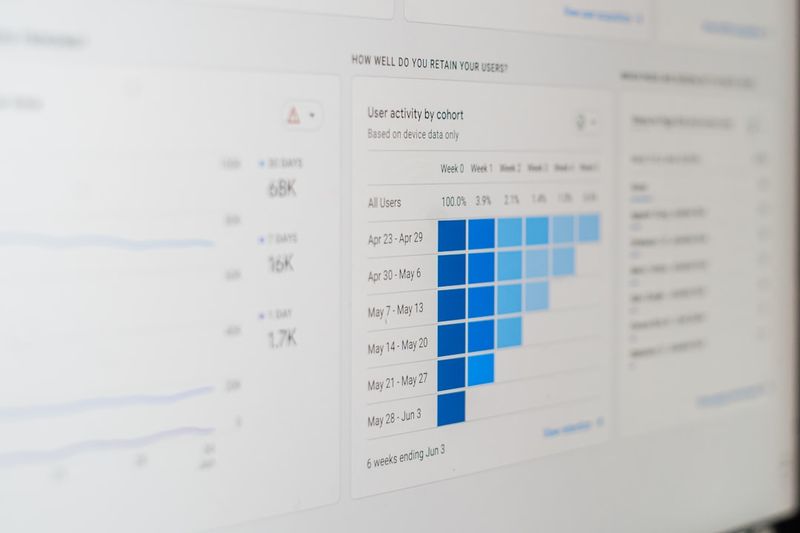
The numbers are brutal. Average churn in the first three months after app install is 77%. That means “getting installs” is the wrong victory condition if onboarding and value are fuzzy. [Searchlab]
The counterintuitive move is to build your ad system around two things you can control as a developer:
- A repeatable creative workflow you can produce without a creative team (from existing product images).
- A measurement loop that tells you what to do next using only 3 metrics: CTR, CVR, CAC payback.
In 2026, AI makes iteration cheap, but it also makes it easy to ship a thousand variations that teach you nothing. You need constraints, not more options.
The 3-metric dashboard that removes 90% of the guesswork
If you’re a builder, you want a tight feedback loop. Most ad dashboards are the opposite: a pile of metrics that look scientific and behave like noise.
For first paid ads SaaS, I’d rather you track three numbers daily than fifteen numbers weekly:
- CTR (click-through rate): tells you if the hook + creative earns attention.
- CVR (conversion rate): tells you if the landing page + offer closes the click.
- CAC payback (in days or months): tells you if the unit economics can scale.
Everything else is a diagnostic metric. Useful later. Distracting now.
How to compute CAC payback without a finance spreadsheet
You don’t need perfect accounting. You need a directional signal you can compare week to week.
Use this:
- Payback (months) = CAC / (Monthly gross profit per customer).
- Monthly gross profit per customer ≈ ARPA × gross margin.
If you don’t know gross margin yet, assume a conservative margin and keep it consistent. The point is to avoid scaling ads that “work” but never pay back.
Benchmarks that are actually actionable
Benchmarks vary by category, price point, and channel. But you can still set decision thresholds so you don’t rationalize bad data.
- Low CTR usually means your hook is wrong (or too polite).
- Decent CTR + low CVR usually means your landing page is vague, slow, or mismatched to the ad promise.
- Good CTR + good CVR + bad payback usually means pricing/packaging is the real problem, not ads.
Once you’re staring at these three numbers, you’ll stop “optimizing ads” and start fixing the actual bottleneck.
Ads you can run with zero creative team (built from product images)
Most developers freeze on ads because they think ads require design taste, a camera, and a content calendar.
In 2026, that’s mostly outdated. Nearly 90% of advertisers are already using or planning to use generative AI to build video ads, and projections say 40% of video ads will be AI-generated by 2026. [Tvtechnology]
The practical takeaway: you can create “good enough” ad creative from what you already have—product screenshots, UI states, and product photos—then iterate based on data.
The 30-minute creative kit (what to build before you touch Ads Manager)
- 6 static images (square + vertical): 3 problem-first, 3 outcome-first.
- 3 short videos (10–15s): each is one hook + 3 proof beats + 1 CTA.
- 1 “demo loop” clip (8–12s): the same interaction repeating, no narration.
- 2 landing page variants: one for “problem aware,” one for “solution aware.”
If you’re a Shopify merchant or selling physical products, you’re sitting on an unfair advantage: your product photos can become interactive creative.
This is where we built RotateProduct. We turn a product photo into an interactive 3D spin so buyers can inspect details without guessing. That same asset can be repurposed into ad creatives (short showcase loops, scroll-stopping rotations) without scheduling a new shoot.
Why it matters: better product understanding reduces uncertainty. Lower uncertainty usually means higher conversion and fewer returns, which makes your ads cheaper because you can afford more CAC for the same payback.
If you’re building a Shopify app, the same logic applies. Don’t advertise “features.” Advertise the uncertainty you remove for the merchant: setup time, attribution confusion, returns, support load, or creative production.
The 3-hook test: the fastest way to find your first message that converts
You don’t need 20 angles. You need three hooks that cover the three reasons people buy:
- Time hook: “Do X in Y minutes instead of Z hours.”
- Money hook: “Recover $X / reduce waste / improve conversion.”
- Risk hook: “Stop returns / stop churn / stop compliance surprises.”
That third one matters more in 2026 than founders expect. Trust is a growth lever now, not a legal footnote. People are on edge about privacy, data sharing, and getting trapped in subscriptions.
Write hooks the way your users complain
Founders often write like documentation. Ads need to sound like the customer’s internal monologue.
- “So I built the product. next What? How to get the first customer?”
- “I am Developer… always stuck at marketing / can’t grasp advertising.”
- “Charged with no way to cancel.”
- “UI shows no active subscription.”
That last category is not rare. If your cancellation flow is confusing, you’ll feel it as backlash, refunds, chargebacks, and long-term brand damage. Make “easy to cancel” part of your ad promise if your competitors are playing games.
How to run the test (budget + structure)
Keep it simple. The goal is signal, not statistical perfection.
- Pick one channel where your buyers already are (Meta for broad, Reddit for intent communities, Google for high-intent search).
- Create 3 ad sets (one per hook). Keep targeting identical across them.
- Run 2 creatives per hook (one static, one short video).
- Set a small daily budget you can run for 5–7 days without flinching.
- Decide your “kill rules” in advance: if CTR is weak, rewrite hook; if CTR is fine but CVR is weak, fix landing; if both are fine, check payback.
The discipline is pre-committing to the rules. Otherwise you’ll tweak random knobs and call it learning.
Landing pages that convert cold traffic (without rewriting your whole site)
Most SaaS ads fail on the landing page, not in the ad account. Developers hate hearing this because it’s not “fun,” but it’s the leverage point.
Your landing page job is to cash the check your ad wrote. Nothing else.
Two landing paths: problem-aware vs solution-aware
- Problem-aware page: lead with the pain, show the cost of doing nothing, then show the mechanism (how you solve it).
- Solution-aware page: lead with differentiation, proof, and a fast path to try/buy.
For Shopify app marketing, “mechanism” beats “features.” Merchants don’t want another dashboard. They want fewer returns, higher conversion, or less support overhead.
Trust blocks you should add in 2026
Trust is not a badge carousel. It’s answering the specific fears people have right now: privacy, billing, and lock-in.
- Billing clarity: price, renewal terms, and what happens on cancellation in plain language.
- Cancellation path: a one-sentence promise (“Cancel in-app in two clicks”) and make it true.
- Data posture: what you store, what you don’t store, and who you share with (ideally: nobody by default).
- Onboarding time: “Time to value” stated honestly (even if it’s not instant).
This is also where PLG helps. If your product delivers an “aha” moment fast, your ads don’t need to persuade as hard. PLG is becoming more common because it reduces acquisition friction. [Arcade]
Channel selection in 2026: pick based on intent, not vibes
The app market is huge and still growing—projected to reach $673B by 2027, with 257B downloads in 2025. Competition is not slowing down. [App369]
So channel selection matters. But not the way Twitter threads make it sound.
A simple decision rule
- If you can name the exact search someone does before buying, start with search ads (high intent).
- If your product needs showing (UI, before/after, physical detail), start with short video + static (Meta-style feeds).
- If your buyer lives in communities and asks peers first, start with community-driven targeting and founder-led posts, then retarget.
Also be aware of auction pressure. 2026 political ad spend is projected at $10.84B for the U.S. midterms, and that money distorts auctions in ways small teams feel first. Expect CPM volatility and plan tests accordingly. [Axios]
Meta is still a machine for performance, and it’s doubling down on AI infrastructure and ad systems. That’s good for targeting efficiency, but it also means you’re competing in an increasingly optimized marketplace. Your edge becomes creative clarity and offer design, not secret settings. [Tomsguide]
A 7-day launch plan for your first SaaS ads strategy
This is the part most founders want: a plan you can execute between shipping features.
- Day 1: Define ICP in one sentence and one “job to be done.” Keep it sharp. AI-driven personalization is useful, but only after you have a real hypothesis. [Saashero]
- Day 2: Write 3 hooks (time, money, risk). Draft 2 variants each using user language.
- Day 3: Build the 30-minute creative kit from existing assets. If you’re e-commerce, repurpose product photos into interactive or looping showcase creatives (this is where tools like RotateProduct can help).
- Day 4: Create two landing paths (problem-aware and solution-aware). Add trust blocks (billing, cancellation, data).
- Day 5: Launch with small budgets. Keep targeting constant across hook tests.
- Day 6: Review the 3 metrics. Make exactly one change per failing metric (hook vs landing vs economics).
- Day 7: Double down on the best hook and start a second test: new creative against the winning hook, same audience.
This is how you get from “I can’t grasp advertising” to a system that behaves like engineering.
Shopify app marketing: why interactive product visuals can make ads cheaper
Shopify merchants don’t just buy apps. They buy reduced uncertainty.
If you’re selling physical products (or building apps for those merchants), visuals do more work than copy. The buyer wants to inspect. Zoom. Rotate. See edges. Confirm size cues. That’s conversion.
Where 3D spins and showcase loops fit in the funnel
- Prospecting ads: short loops that show the product clearly in 1–2 seconds (pattern interrupt without being gimmicky).
- Product page: interactive view reduces “is this what I think it is?” friction.
- Retargeting: show the exact product the visitor viewed, with a clearer angle or detail.
This is the logic behind RotateProduct. I built it because teams kept re-shooting products to answer the same buyer questions. It’s slower than it needs to be, and it makes ad iteration expensive.
If you can produce new ad variants from existing product images, you can run more hook tests per month. More tests means more learning. That’s the only “hack” that compounds.
What to do after you get clicks (so churn doesn’t erase your wins)
Remember the 77% early churn stat. Acquisition without activation is a leaky bucket. [Searchlab]
If you’re running ads, your onboarding has to be part of the ad system. Not a separate “later” project.
A practical activation checklist
- One primary action on first session (not five).
- A visible progress indicator to first value (even if it’s just a checklist).
- An “example dataset” or template so users can see results without setup friction.
- A triggered email at 30–60 minutes if they stall, pointing to one next step.
If you’re PLG-driven, ads become a distribution layer for the product experience. That’s why PLG keeps winning: it reduces how much persuasion you need to buy. [Arcade]
Founder-led content still matters too. There are real examples of SaaS growing without ad spend via consistent founder content, but most founders don’t have the patience. Ads are the shortcut—if you run them like experiments. [Sidestackers]
And if you want the long game, SEO remains a compounding channel when executed with high-intent content and comparisons. Ahrefs is the canonical example of what sustained BOFU content can do. [Sidestackers]
The near-term move is still the same: keep your ad loop tight, and don’t let “more traffic” hide “weak activation.”
Frequently Asked Questions
How do I get my first customers if I’m a developer and hate marketing?
Run a 7-day experiment: 3 hooks, 2 landing paths, and judge only CTR, CVR, and CAC payback. It turns “marketing” into an engineering loop you can iterate. Early churn is high (77% in 3 months), so pair ads with a tight onboarding path. [Searchlab]
What’s the best channel for first paid ads for SaaS in 2026?
Pick based on intent: search ads if buyers have clear queries; feed ads if you must show the product; community-driven channels if buyers ask peers first. Expect auction volatility in 2026 due to record political ad spend ($10.84B projected). [Axios]
Can I run ads without a creative team?
Yes. Build a small creative kit from existing assets (screenshots/product photos) and iterate. GenAI is now mainstream: nearly 90% of advertisers are using or plan to use it, and 40% of video ads are projected to be AI-generated by 2026. [Tvtechnology]
How do I avoid trust issues like “no way to cancel” or hidden subscriptions?
Make billing and cancellation explicit on your landing page and inside the app. Add a plain-language cancellation promise and ensure it’s true. In 2026, trust is a conversion lever because users are increasingly sensitive to lock-in, privacy, and dark patterns.
How does Shopify app marketing differ from normal SaaS ads?
Merchants buy reduced uncertainty and operational outcomes (conversion, returns, support load). Visual proof often beats feature lists. If your app affects product presentation, interactive visuals and clear before/after demos can lift CVR, which makes CAC easier to pay back.